
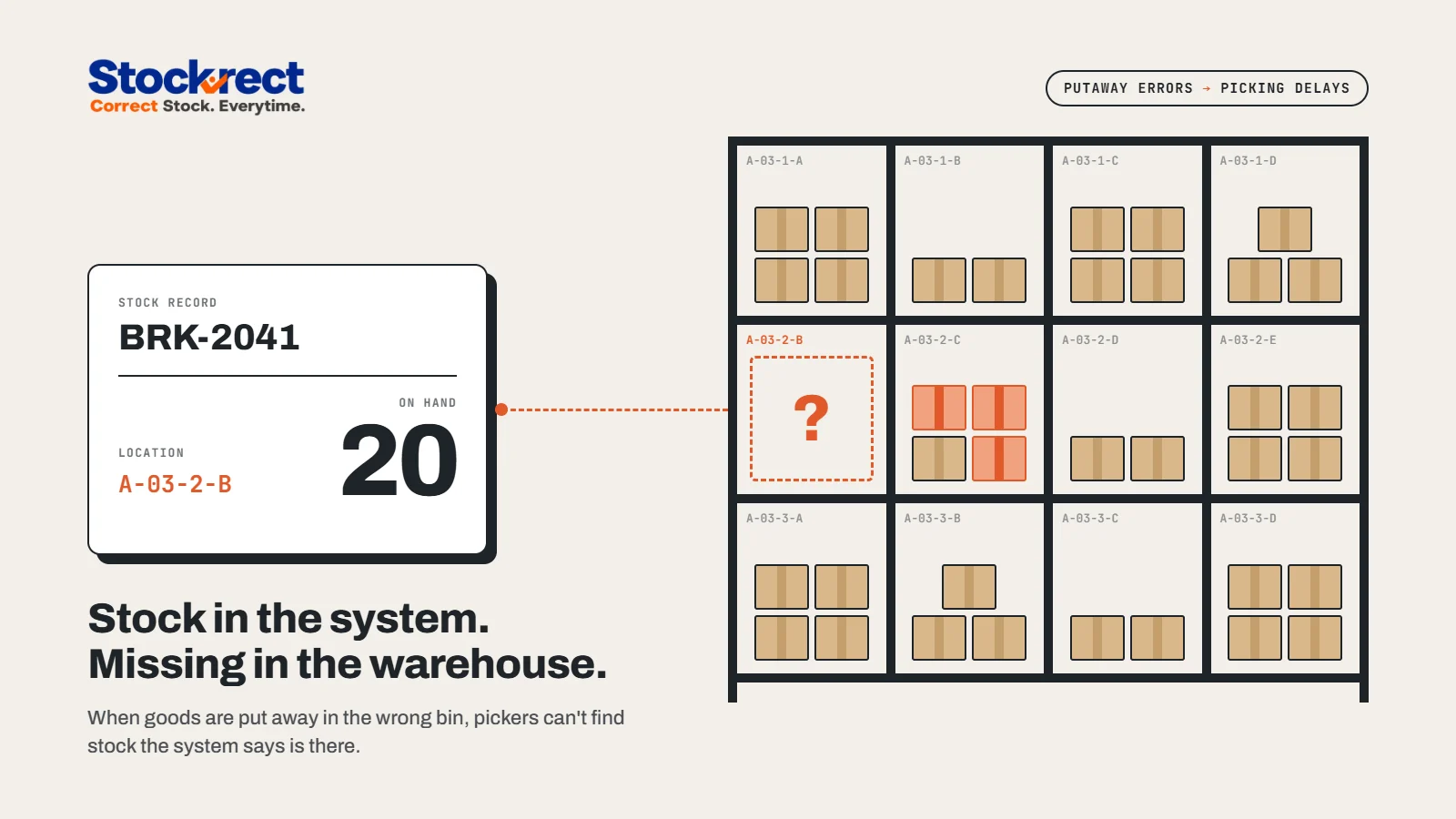
A warehouse system shows 20 units in stock. An order arrives, but the picker cannot find them in the recorded location.
The stock may have been received correctly. The problem began later, when the goods were stored in the wrong location or their location was not updated accurately.
For distributors handling hundreds or thousands of SKUs, these putaway errors can cause picking delays, unnecessary stock searches and unreliable warehouse operations.
Why do putaway errors happen?
Putaway is the process of moving received goods to their designated storage locations and recording where they are stored.
Errors commonly occur when:
- Goods are placed in the wrong bin: Staff store items in a nearby or convenient location instead of the assigned one.
- Location updates are missed: Physical stock is moved, but the system continues to show its previous location.
- Similar items are confused: Products with similar descriptions, packaging or part numbers are stored incorrectly.
- Temporary storage becomes permanent: Goods placed in a staging area are not moved to their final location in the system.
- Receiving and putaway are disconnected: Goods are recorded as received, but the subsequent storage step is not completed properly.
In an automotive spare-parts warehouse, for example, two similar-looking components may have different SKUs. If one is placed in the other’s bin, the system may show the correct overall quantity while the picker still cannot find the required part.
What is the business impact?
Putaway errors affect more than warehouse organisation.
Delayed order fulfilment: Pickers spend time searching for items that should be readily available.
Unnecessary purchasing: Teams may reorder stock that already exists but cannot be located.
Reduced productivity: Repeated searches interrupt picking and other warehouse activities.
Lower confidence in inventory records: Staff begin relying on memory or asking colleagues instead of trusting recorded locations.
Customer service issues: Delayed picking can postpone packing and dispatch, potentially affecting delivery commitments.
Five controls to reduce putaway errors
1. Assign clear storage locations
Use a consistent location structure, such as zone, rack, shelf and bin. Ensure staff can identify each location unambiguously.
2. Verify the item before storing it
Confirm the SKU or item identifier before placing goods in a location. Similar-looking products should not be identified by appearance alone.
3. Record the actual storage location
The system should reflect where the goods are physically stored—not where they were originally intended to go. Where the actual location differs from the planned location, the discrepancy should be handled according to the warehouse process.
4. Make location updates part of the movement
Do not treat putaway as complete until the required location record has been updated. Apply the same discipline when stock is moved later.
5. Investigate repeated location discrepancies
Track recurring picking failures, stock searches and location corrections. Investigating the patterns can reveal unclear bin labels, inadequate training or process gaps.
A quick putaway accuracy checklist
Before considering putaway complete, confirm:
- The correct SKU has been identified.
- The physical storage location is clearly identified.
- The goods have been placed in that location.
- The recorded location reflects where the goods were actually stored.
- Any exception has been documented and assigned for resolution.
The key takeaway
Inventory accuracy depends on both how much stock you have and where that stock is located.
A correct stock quantity is not enough if warehouse staff cannot find the goods when an order needs to be fulfilled. Consistent putaway procedures, accurate location records and disciplined updates during stock movements help bridge that gap.
Stockrect is focused on helping distributors bring greater control and visibility to everyday inventory and warehouse operations. When evaluating a warehouse solution, businesses should examine how well it supports item identification, location control and accurate stock-movement recording.
Related reading: Why Inventory Accuracy Breaks Down as Distributors Grow
For receiving-related discrepancies, see Goods Billed but Not Received: How GRN Discrepancies Affect Inventory Accuracy.